A traffic robot can direct vehicles, inspect roads, manage parking, or work beside people in a road zone. The business case depends on who pays, what task the robot handles, and whether the result can be checked after each shift.
For a company studying this field, the clearest openings sit around a paid service rather than a robot sale alone.
- Traffic control robots can work at sites where staff face moving vehicles.
- Inspection systems can turn road work into a repeatable data service.
- Buyers will ask for safety records, uptime, support, and a clear payback path.
Where the sales can come from
The company can sell hardware to transport agencies, parking operators, road contractors, or private site owners. That route suits buyers with their own staff, repair teams, and systems for managing field equipment.
A service contract reaches buyers with fewer technical staff. The supplier owns or leases the robots, sends them to a work site, and charges for a defined task, shift, or inspection report.
This model keeps the buyer’s first payment lower, but it puts repair costs and failed missions on the supplier.
Software is another business line. A control system could assign tasks, record incidents, store inspection images, or send alerts to a human operator. The software has to connect with the buyer’s existing traffic lights, cameras, parking system, or work-order tools. That connection work may take more time than the robot itself.
Tasks that could support a business
The task has to be narrow enough to measure. “Improve traffic” gives a buyer no way to judge the result, while “keep a marked lane clear during a four-hour work period” gives both sides something to check.
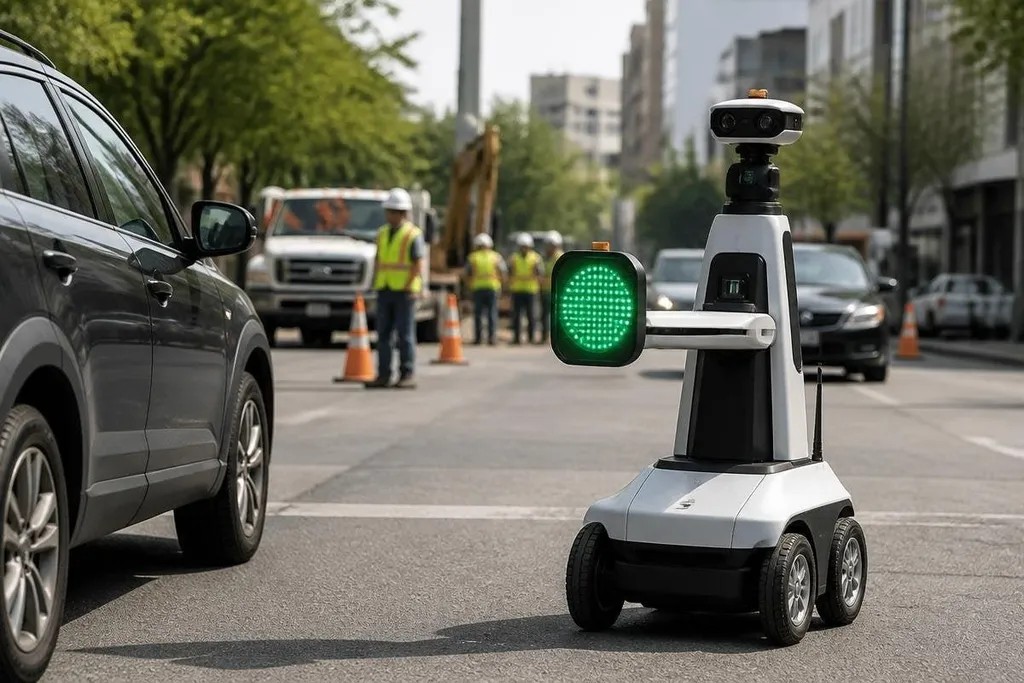
Traffic control is one possible use. A robot could carry signs, lights, or sensors near a work zone, with a human taking control when the road layout changes. The sale would depend on safe movement, clear warnings, and records that show when the system ran.
Road inspection creates another path. A robot could collect images or other sensor data along a fixed route, then send the files to a person who checks cracks, markings, signs, or surface damage. The supplier would need to state what the sensors can detect and what still needs a human visit.
Parking and site traffic may offer a simpler first market. A robot could guide vehicles, check open spaces, or move through a private yard where the owner controls the roads. Private sites can reduce the number of public-road approvals, though they still need rules for people, vehicles, weather, and emergency access.
A traffic robot can look ready for a private yard and still lose the sale when its route needs a paid operator or road changes. A report at Robot24.com can show the machine, site, test date, and control setup, giving a buyer facts to price the work before the next section counts the costs.
The costs that can erase the sale
A traffic robot carries costs beyond motors, sensors, and batteries. The supplier may need remote supervision, site surveys, insurance, operator training, repairs, software updates, and a process for stopping the robot when conditions change.
Public roads add another layer. A buyer may ask who carries responsibility after a collision, who can review the robot’s logs, and which authority must approve the system. Those answers belong in the contract before a pilot begins.
Weather and road layout can also change the work. Rain may affect cameras, road markings may move, and a parked vehicle may block the planned route. A system that works on one private site may need new maps, rules, or sensors at the next site.
The strongest opposing view is that a trained worker may cost less for a small job. I’d start with tasks that repeat often, take people close to traffic, or produce records a buyer already has to create.
A practical buyer and builder checklist
Use these checks before funding a traffic robot project:
- Name the task: Write the exact work, site, shift length, and human role.
- Set the safety stop: Decide who can stop the robot and how fast that action must happen.
- Count the full cost: Add staff, support, repairs, insurance, approvals, and site preparation.
- Choose the proof: Pick the result the buyer will measure, such as completed inspections or hours worked.
- Plan the failure: State what happens after a blocked route, lost connection, low battery, or bad weather.
- Price the next site: Check whether the system can move to another location without a full redesign.
A paid pilot should end with a report that shows the task completed, the time spent, the human interventions, and the cases the robot could not handle. That record gives the buyer a basis for renewal and gives the supplier a clearer product to sell.
The next useful traffic robot may be the one attached to a narrow contract: one site, one task, one shift, and a result the customer can verify.